ARB Submission Framework, Approved Palettes, and What 15 Years of Northeast Florida Painting Has Taught Us
HOA Painting in Jacksonville: The Complete Homeowner's Guide
The complete guide to HOA painting in Jacksonville, Florida — ARB submission framework, approved palettes, LRV requirements, and 15 years of Northeast Florida experience.


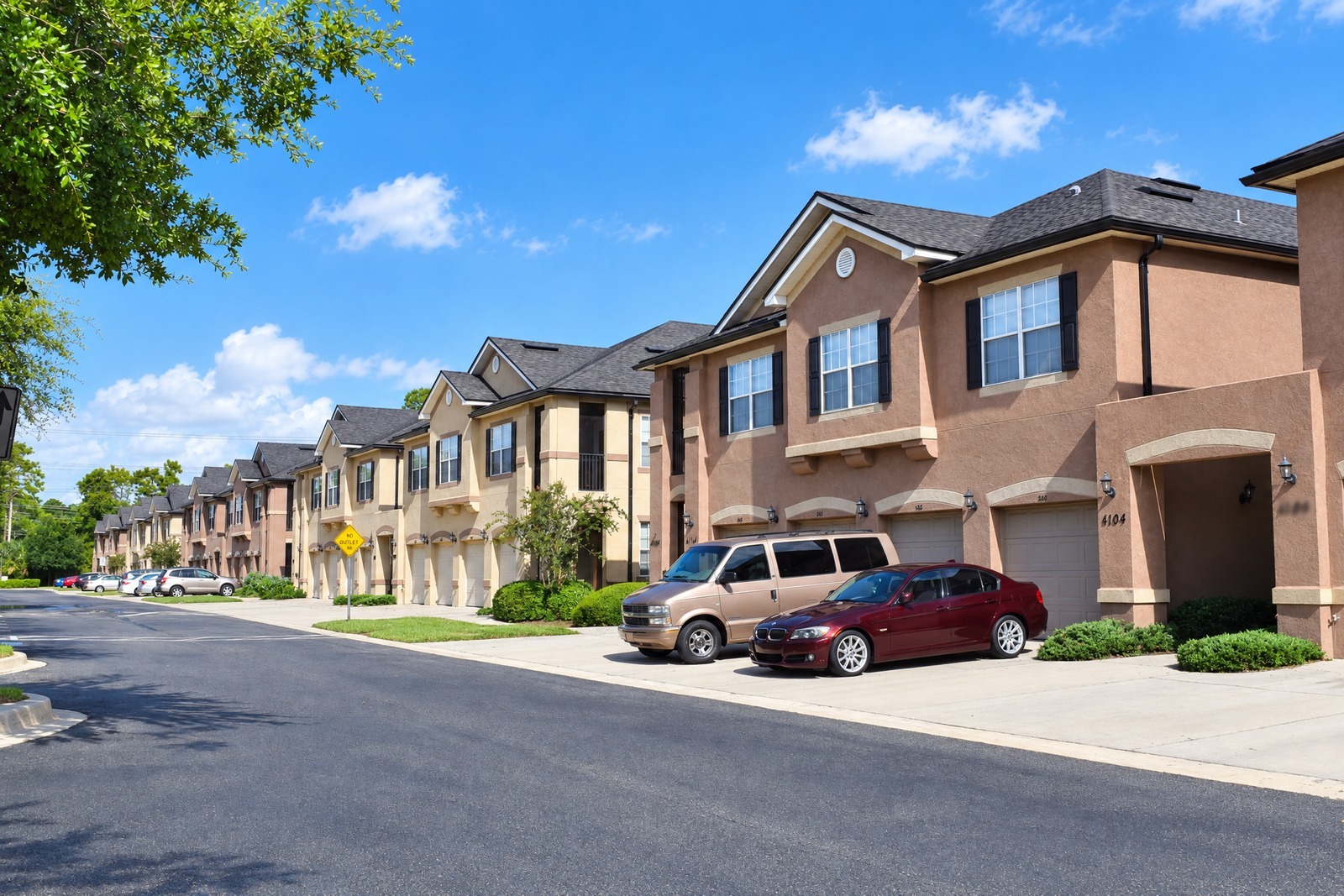 Real project
Recognized Across Northeast Florida for Quality, Care & Craftsmanship



Everything Jacksonville homeowners need to know about ARB approval, approved palettes, LRV requirements, and the 2024 Florida HOA transparency law — built from 15 years of submitting packets across Northeast Florida.
By Thomas Drake, Founder & Owner, A New Leaf Painting Contractors · 15 years painting in Northeast Florida HOAs · Updated April 2026
HOA painting in Jacksonville requires written Architectural Review Board (ARB) approval before any exterior color change, with submission packets that include manufacturer paint codes, sheen, Light Reflectance Value (LRV), and prep specifications. Florida law requires ARBs to respond within roughly 30 days, but most Northeast Florida communities — Marsh Landing, Eagle Harbor, Sawgrass, Julington Creek Plantation, Palencia, eTown, Nocatee — operate on 4 to 6-week review cycles. The fastest path through the process is hiring a licensed and insured painting contractor with documented community-level experience who helps prepare a complete spec packet on your behalf. After 15 years and 5,000+ projects across Duval, St. Johns, Clay, and Nassau counties, we built this guide to be the resource we wish every Jacksonville HOA homeowner had before they signed a contract.
Why homeowners bring us in
99+
NE FL HOA communities documented
25 yrs
Family-owned in NE Florida
5,000+
Completed residential & commercial projects
700+
verified five-star reviews
What an Architectural Review Board actually does
An Architectural Review Board (ARB) — sometimes called an Architectural Review Committee (ARC), Architectural Control Committee (ACC), or Design Review Board — is the body within a homeowners association that reviews and approves exterior modifications to homes in the community. In Northeast Florida, the ARB has authority over paint colors, sheen, trim treatments, accent colors, garage doors, fences, roofing, additions, landscaping, and any change visible from the street, common area, or community golf course.
The ARB exists for one practical reason: to protect property values by maintaining architectural consistency across the community. When you bought your home in Marsh Landing, Eagle Harbor, Julington Creek, Sawgrass, or any Jacksonville-area master-planned community, you agreed to follow the recorded covenants, conditions, and restrictions (CC&Rs) that govern exterior changes. Painting your home without ARB approval — even repainting the exact same color — violates those CC&Rs in most Florida HOA communities and exposes you to fines, forced repaints, and complications when you eventually sell.
The ARB does not exist to make your project harder. Most ARBs are staffed by volunteer homeowners and a small administrative team at the management company. Their goal is consistent enforcement of standards that everyone in the community agreed to when they bought in. Working with the ARB rather than around it is always faster, cheaper, and less stressful than the alternative.
Florida law and the 2024 ARB transparency update
Florida statutes governing HOAs and ARBs include Florida Statute 720.303 (HOA procedures generally), 720.3035 (architectural review authority), and 720.305 (enforcement). In May 2024, Florida enacted significant updates to 720.3035 that materially changed how ARBs in Northeast Florida operate. Every Jacksonville homeowner submitting a paint application in 2026 should be aware of what changed.
The 2024 update did three important things. First, it required ARBs to make decisions on architectural applications within a specified timeframe — typically 30 to 60 days depending on complexity. Second, it required any denial to reference specific written architectural standards rather than subjective aesthetic concerns. Third, it limited ARB authority over interior changes that are not visible from the home’s frontage, adjacent parcels, common areas, or community golf courses.
Important: Florida HOA architectural review timelines depend on the statute, your association’s governing documents, and how your application was submitted. If your HOA does not respond within the stated review period, do not assume you are approved without written confirmation. Always document your submission date, request a written confirmation of receipt from the management company, and consult your governing documents — or a qualified attorney — before assuming any default approval.
The practical impact of the 2024 law: ARBs that previously sat on applications for months can no longer do that without legal exposure. ARBs that previously denied applications based on personal taste must now cite specific written standards. This is good news for homeowners, but it does not eliminate the need to submit a complete, professional application — incomplete applications are still rejected on completeness grounds, and that resets the clock.
The 7-step ARB submission framework
Every successful HOA painting application in Jacksonville follows roughly the same seven-step path. Whether you live in Nocatee, Eagle Harbor, Sawgrass, Marsh Landing, eTown, or any other Northeast Florida master-planned community, this is the framework that gets your project approved on the first submission.
The 7-step ARB submission framework
- 1
Pull your CC&Rs and current architectural guidelines
Your covenants, conditions, and restrictions plus your current published architectural standards are the authoritative documents. Get the most recent versions from your management company — guidelines update over time and the version you received at closing may be outdated. Read the paint and exterior finish sections carefully before you submit anything.
- 2
Identify your specific sub-association (if applicable)
Many large Jacksonville communities operate two-tier governance — a master HOA plus a sub-association for your specific village or neighborhood. Eagle Harbor (Stone Creek, Pine Lake, Black Creek), Julington Creek Plantation (47+ neighborhoods), Fleming Island Plantation (Margarets Walk, Pace Island), Sawgrass (Players Club, Country Club), and Nocatee (Twenty Mile, Coastal Oaks, Crosswater Village) all have this structure. You almost always need approval from the sub-association, not just the master. For verified management contacts and submission methods across nearly 100 Northeast Florida communities, see our Jacksonville HOA Master Directory.
- 3
Confirm the approved palette before selecting colors
Most Jacksonville HOA communities maintain a list of pre-approved paint colors with specific manufacturer codes — typically Sherwin-Williams or Benjamin Moore. Some palettes specify the exact body, trim, and accent combinations allowed. Selecting from the approved palette dramatically increases approval speed and reduces the chance of rejection. Selecting outside the palette is possible but adds review time. We’ve documented the approved palettes for 20 of the most active Jacksonville-area communities in our Jacksonville HOA Paint Color Guide, and our color consultation service can help you select before submission.
- 4
Get a complete written estimate from a licensed and insured contractor
The estimate should specify the manufacturer (Sherwin-Williams or Benjamin Moore), product line (Duration, Emerald, Regal, Aura), color names with manufacturer codes, sheen (flat, satin, semi-gloss), LRV (Light Reflectance Value), prep scope, primer specification, and the total project timeline. Vague estimates produce vague applications, which trigger ARB rejections.
- 5
Assemble the submission packet
A complete packet typically includes the architectural change application form, color samples or chips, a written description of body, trim, and accent assignments, paint product specifications, prep scope, and contractor documentation. Photos of the home from multiple angles are usually required. For the full walkthrough of every component — with a sample format and the most common reasons packets get delayed — see our detailed guide on what to include in your Jacksonville HOA paint submission packet. A professional painting contractor should help prepare this packet on your behalf as part of the standard project workflow.
- 6
Submit before the application deadline for the next ARB meeting
Most Northeast Florida ARBs meet monthly or twice monthly with specific submission deadlines (often 7 to 14 days before the meeting). Missing the deadline means your application waits another full month. The Marsh Landing Architectural Review Committee, for example, meets the 2nd and 4th Mondays — submissions need to land at least a week ahead of the relevant meeting.
- 7
Wait for written approval before any work begins
Do not allow your contractor to start prep, pressure washing, or paint until you have written ARB approval in hand. Some Jacksonville communities approve subject to conditions — for example, requiring a specific trim treatment or a slight color modification. Read the approval carefully and make sure the contractor’s scope matches the approved scope exactly. Painting outside the approved scope, even by accident, can trigger forced repaint orders.
What belongs in a complete submission packet
A complete ARB submission packet for an exterior repainting project in any Jacksonville HOA-governed community should contain the following elements. Missing any one of these is the most common reason for first-pass rejection. For a deeper component-by-component walkthrough — with a sample packet format, common rejection reasons, and community-specific variations — see our complete guide on what to include in your Jacksonville HOA paint submission packet.
| Component | What to include |
|---|---|
| Application form | Current architectural change form from your management company, fully completed and signed by the homeowner of record |
| Color specifications | Manufacturer (Sherwin-Williams or Benjamin Moore), color names, manufacturer codes, sheen for body, trim, and accent |
| LRV values | Light Reflectance Value for each color (most communities require this; some specify minimum or maximum LRV) |
| Product line | Specific product line — Sherwin-Williams Duration or Emerald, Benjamin Moore Regal Select or Aura — not just a brand name |
| Color samples | Physical paint chips or printed color cards for body, trim, and accent. Some communities require painted sample boards. |
| Property photos | Current photos of the home from front, sides, and rear — typically 4 to 8 photos showing all elevations being repainted |
| Color placement plan | Written description of where each color is being applied — body walls, trim, fascia, soffits, garage door, accent |
| Surface preparation scope | Pressure washing, scraping, caulking, priming, wood repair, stucco patching — the prep makes the paint last and the ARB knows it |
| Contractor information | Insurance certificates, business documentation, applicable license/registration, warranty terms, scope of work |
| Project timeline | Estimated start and completion dates so the ARB knows when work will be visible in the community |
Swipe to see the whole table
Why packet completeness matters so much: Many Florida HOAs reject incomplete applications without reviewing the substance, which forces homeowners to restart the entire process and adds another full review cycle to the timeline. The difference between a 4-week and a 12-week project often comes down to whether the contractor submitted a complete packet on the first try.
Building your packet now? Our companion guide walks through all 11 components with examples and a sample packet format, plus the 12 most common reasons Jacksonville submissions get delayed.
LRV explained: why your HOA cares about Light Reflectance Value
Light Reflectance Value (LRV) is a number from 0 to 100 that measures how much visible and usable light a paint color reflects. Pure black is 0. Pure white is 100. Florida’s intense UV environment makes LRV one of the most important specifications on any exterior paint application — and it’s the spec most Jacksonville homeowners have never heard of before their first ARB submission.
Most Northeast Florida HOA communities specify LRV requirements in their architectural standards. Common requirements look like this: light pastel and white body colors must have an LRV of 80 or greater. Earth tones (browns, taupes, beiges, terra cottas, sages, grays) must have an LRV between specific minimum and maximum values. Garage doors and accents may have separate LRV ranges. The exact numbers vary by community, but the framework is similar across most of Jacksonville.
The science behind why LRV matters in Florida: Darker colors (low LRV) absorb more solar heat. On a Jacksonville exterior wall in July, that translates to surface temperatures 30 to 50°F higher than light-colored walls. The thermal cycling expands and contracts the substrate (stucco, fiber cement, or wood) and the paint film along with it, accelerating cracking, peeling, and substrate damage.
Manufacturers including James Hardie specifically caution against very low LRV colors on their fiber cement products because the heat absorption can warp the siding itself. This is particularly relevant for the heavy Hardie Board inventory in Julington Creek Plantation — see our detailed Hardie Board repainting guide for the primer specifications and LRV considerations specific to fiber cement.
For Florida exterior body walls, the practical sweet spot is an LRV between 55 and 80. That range reflects enough light to keep substrate temperatures manageable and paint lifespans long, without producing the stark, glare-prone look of an LRV-90 white. Trim and accent areas can often use lower LRV values because they cover smaller surface areas and concentrate less heat. We discuss specific paint colors and LRVs in detail in our Jacksonville HOA Paint Color Guide, which lists 12 Sherwin-Williams and Benjamin Moore colors that consistently get approved across Northeast Florida HOAs along with their exact LRV values.
Approved color families across Northeast Florida
While every Jacksonville HOA maintains its own approved palette, certain color families appear repeatedly across Marsh Landing, Sawgrass, Eagle Harbor, Palencia, Julington Creek, eTown, Nocatee, RiverTown, and most other master-planned communities. If you’re starting from scratch on color selection, these are the families that historically face the smoothest ARB review. For community-specific approved palettes with management contacts and ARB submission methods, see our Jacksonville HOA Paint Color Guide, and consider booking a color consultation if you’d like help selecting before submission.
Warm whites and creams
The dominant body color family across Florida HOA communities. Warm whites avoid the cold, hospital-tone effect that pure whites can produce in strong Florida sun. Sherwin-Williams Alabaster (LRV 82), Benjamin Moore Simply White (LRV 89), Sherwin-Williams Greek Villa (LRV 84), and Benjamin Moore White Dove (LRV 85) are widely approved. Pair with a deeper trim and a single accent for a clean Florida-coastal look.
Sands, beiges, and earth tones
The second-most-common body family, especially in Mediterranean and Spanish stucco communities like Palencia, Marsh Landing, and Sawgrass. Sherwin-Williams Accessible Beige (LRV 58), Benjamin Moore Manchester Tan (LRV 65), Sherwin-Williams Natural Linen (LRV 65), and Benjamin Moore Edgecomb Gray (LRV 63) are reliable choices that blend with terracotta roofs and tropical landscaping.
Greiges (gray-beige hybrids)
Trending heavily in newer Jacksonville master-planned communities — eTown, Nocatee Twenty Mile, RiverTown, Seven Pines. Greiges read as warm and modern simultaneously. Sherwin-Williams Agreeable Gray (LRV 60), Benjamin Moore Revere Pewter (LRV 55), Sherwin-Williams Repose Gray (LRV 58), and Benjamin Moore Pale Oak (LRV 70) all approve readily in HOA palettes.
Coastal blues, sages, and muted greens
Common as accent or door colors, occasionally approved as body colors in beach-adjacent communities like Atlantic Beach Country Club, Old Ponte Vedra, Crane Island on Amelia Island, and Marsh Landing. Sherwin-Williams Sea Salt (LRV 63), Benjamin Moore Hale Navy (LRV 6 — typical for shutters and front doors), and Sherwin-Williams Evergreen Fog (LRV 49) are standout examples. For coastal-specific product and color considerations, see our Ponte Vedra Beach salt air repainting guide.
Sherwin-Williams and Benjamin Moore product specifications that hold up to Florida
The premium product lines from the two largest American paint manufacturers — Sherwin-Williams and Benjamin Moore — are formulated specifically for the demands of long-lasting exterior performance. After 15 years of painting Northeast Florida residential and commercial properties, these are the products we use most often, and the ones HOA architectural review boards consistently approve.
Sherwin-Williams Duration
A weather-resistant 100% acrylic latex topcoat with self-priming properties on most surfaces. Excellent UV protection and color retention. Standard premium choice for inland Jacksonville exteriors. Manufacturer warranty is lifetime limited on residential surfaces. Available in flat, satin, and gloss. Strong choice for stucco, fiber cement, and properly primed wood. Always applied as two coats over a properly prepared substrate for full warranty coverage.
Sherwin-Williams Emerald
Sherwin-Williams’ top-tier exterior product, formulated with advanced acrylic resin technology specifically engineered for severe weather conditions including coastal exposure. Higher solids content than Duration, superior salt resistance, and notable mildew resistance. The premium choice for Ponte Vedra Beach, Marsh Landing, Sawgrass, Atlantic Beach, Amelia Island, and any Northeast Florida property within two miles of the coast. Read more in our Ponte Vedra Beach salt air repainting guide.
Benjamin Moore Regal Select Exterior
Benjamin Moore’s standard premium exterior product. 100% acrylic latex with strong UV protection and color retention. A direct competitor to Sherwin-Williams Duration. Performs well on residential exteriors throughout Jacksonville and Northeast Florida. Available in flat, satin, low lustre, and semi-gloss.
Benjamin Moore Aura Exterior
Benjamin Moore’s top-tier exterior product with proprietary Color Lock technology for industry-leading color retention. The Benjamin Moore equivalent to Sherwin-Williams Emerald — ideal for coastal exposure, demanding UV environments, and any application where premium long-term performance justifies the upfront cost. Strong choice for historic district homes in San Marco, Avondale, and Riverside where color accuracy matters. See our San Marco historic cabinet refinishing guide for an example of premium product application in historic settings.
Why product specification matters in your ARB packet: Listing “Sherwin-Williams paint” in your application is not enough. ARBs increasingly require the specific product line because the durability, color retention, and warranty differ significantly between standard, mid-tier, and premium products. Specifying “Sherwin-Williams Emerald” or “Benjamin Moore Aura” signals to the ARB that the project will hold up to community standards for years rather than fail visibly within 3 to 5.
Surface preparation that satisfies an ARB
Surface preparation is half the job on any exterior repaint, and it’s the half that determines whether the topcoat lasts 12 years or 4. ARB submission packets that specify thorough preparation procedures are approved faster than packets that gloss over prep — because volunteer ARB members have all seen what happens when neighbors hire contractors who skip the prep work.
Pressure washing
Every Florida exterior repaint starts with professional pressure washing — typically 2,500 to 3,000 PSI with appropriate detergent or surfactant. The wash removes mildew, chalking residue from the previous paint, dirt, pollen, and (on coastal homes) salt deposits. Florida humidity requires a 24 to 48-hour drying period after washing before any further prep can begin. Painting same-day after pressure washing traps moisture in the substrate and causes blistering within 12 to 24 months. Coastal homes in Marsh Landing, Sawgrass, and the beaches require additional care here — our Ponte Vedra Beach salt air guide covers the salt-removal protocols specific to oceanfront and intracoastal exposure.
Carpentry and wood repair
Wood rot, soft trim, damaged fascia, rotted soffits, and failing window casings all require carpentry repair before paint is applied. Homes in older Jacksonville communities like Deerwood, Glen Kernan, Queens Harbor, and Epping Forest, plus Riverside, Avondale, and San Marco historic districts, almost always need carpentry work as part of a repaint. PVC trim (Azek, Versatex) is increasingly used for replacement of rot-prone components because it never absorbs moisture and holds paint indefinitely. We cover this in detail on our carpentry repairs service page.
Stucco repair and patching
Hairline cracks, crazing, and surface imperfections in stucco are filled with elastomeric patching compound rather than standard caulk because elastomeric flexes with humidity cycles without breaking. Larger cracks may indicate underlying movement or water intrusion that needs to be addressed before painting. Stucco-clad homes in Palencia, Marsh Landing, Sawgrass, Glen Kernan, Pablo Creek Reserve, and Queens Harbor benefit significantly from professional stucco repair as part of any repaint.
Fiber cement and Hardie Board prep
Hardie Board and other fiber cement siding has prep specifications that differ from stucco and wood. Existing caulked joints typically need to be inspected and re-caulked at every transition. Bonding primer is required on bare or freshly cut fiber cement. Color selection matters more here than on other substrates because of the LRV/heat absorption issue noted above. Our Hardie Board repainting guide for Julington Creek walks through the full prep protocol.
Caulking and sealing
Window perimeters, door perimeters, trim joints, and any vertical-to-horizontal transition needs fresh, high-quality caulk before painting. We use 100% acrylic-urethane sealants rated for exterior exposure with 25 to 50-year manufacturer warranties. Skipping caulk replacement is one of the fastest ways to produce a repaint that looks fine on day one and shows visible failure within two years.
Priming
Bare wood gets oil-based stain-blocking primer (Zinsser Cover Stain or equivalent). Bare metal gets a corrosion-inhibiting primer. Stucco and masonry get a bonding primer rated for those substrates (Sherwin-Williams Loxon XP, Benjamin Moore Insl-X Stix). Two-coat application of premium topcoat over properly primed substrate is the foundation of every paint job that holds up to Florida heat, humidity, UV, and (on coastal homes) salt-laden air for a decade or more.
Master HOA vs. sub-association approvals
Many of Jacksonville’s largest HOA-governed communities operate on a two-tier governance structure that catches first-time buyers off guard. Understanding which body needs to approve your paint project is the difference between a smooth approval and a forced repaint.
The master HOA governs the entire community — common roads, gates, amenities, landscaping, and shared infrastructure. Master HOAs typically have broad architectural authority but often delegate paint approval to the sub-association.
The sub-association governs your specific village, neighborhood, or section within the master community. Each sub-association has its own dues, its own ARB, and often its own approved palette. The sub-association is usually the body that must approve your paint application.
Communities operating on this two-tier structure include Eagle Harbor in Fleming Island (multiple sub-associations including Stone Creek managed separately by RealManage), Julington Creek Plantation (47+ neighborhoods within the master CDD), Fleming Island Plantation (Margarets Walk, Pace Island, and others), Sawgrass (Players Club versus Country Club), Nocatee (Twenty Mile, Coastal Oaks, Crosswater Village, Del Webb Ponte Vedra, and others), and World Golf Village (King & Bear, Slammer & Squire, Laterra, and others).
The practical implication: pull both sets of governing documents — master and sub — before you submit. Confirm with your management company which body has paint authority for your specific home. Submit to both if there’s any ambiguity. The cost of submitting one application that gets bounced back to a different ARB is one to two extra weeks of timeline. The cost of painting under the wrong approval is a full forced repaint. Our Jacksonville HOA Master Directory identifies the management company and submission method for each major community, and where two-tier governance applies it specifies which body has paint authority.
Realistic timelines by community
Florida law requires ARBs to respond to applications within roughly 30 days, and the 2024 statutory updates reinforced this timeline. In practice, most Jacksonville HOA communities operate on 3 to 6-week review cycles for paint applications, with specific timing varying by how often the ARB meets and how complete the submission packet is.
| Community | Typical review cycle | ARB meeting frequency |
|---|---|---|
| Marsh Landing Country Club | 4 to 6 weeks | 2nd & 4th Mondays |
| Sawgrass Players Club | 4 to 6 weeks | Twice monthly |
| Eagle Harbor | 3 to 5 weeks | Monthly (varies by sub-HOA) |
| Julington Creek Plantation | 3 to 5 weeks | Monthly |
| Palencia | 3 to 4 weeks | Monthly |
| eTown | 2 to 4 weeks | Monthly |
| RiverTown | 3 to 4 weeks | Monthly |
| Nocatee (sub-HOAs) | 3 to 6 weeks | Varies by village |
| Deerwood | 3 to 5 weeks | Monthly |
| Queens Harbor | 3 to 5 weeks | Monthly |
| Glen Kernan | 3 to 5 weeks | Monthly |
Swipe to see the whole table
The fastest path through any of these timelines is the same: submit a complete packet, with all required components, well before the next ARB meeting deadline. Incomplete packets get bounced back and reset the clock; complete packets typically approve on the first cycle. Our Jacksonville HOA Master Directory lists verified management contacts, phone numbers, and ARB coordinators for nearly 100 Northeast Florida communities, and our submission packet guide covers the components in depth.
Common rejection reasons and how to avoid them
After a quarter-century of submitting paint applications to Jacksonville HOA architectural review boards, we’ve seen every variety of rejection. The good news: nearly every common rejection reason is preventable with a complete, professional submission packet. The full list of common rejection reasons — with examples — is in our submission packet guide; the highlights are below.
Vague color descriptions
“Tan” or “beige” without manufacturer codes is the single most common reason for first-pass rejection. ARBs require specific manufacturer (Sherwin-Williams or Benjamin Moore), product line (Duration, Emerald, Regal, Aura), color name, and color code. Always include LRV. Always specify sheen.
Selecting from outside the approved palette without a variance request
Most Jacksonville HOA communities maintain pre-approved palettes. Submitting a color outside that palette without explicitly requesting a variance often produces an automatic rejection. If you want a non-palette color, submit a formal variance request alongside your standard application — and expect a longer review cycle. The community-specific palettes are documented in our Jacksonville HOA Paint Color Guide.
Missing prep specifications
“We will paint the exterior” without prep details suggests to the ARB that prep will be skipped. Every successful packet specifies pressure washing, drying time, scraping, priming, caulking, and any wood or stucco repair scope. The ARB knows what good prep looks like and rewards packets that demonstrate it.
Inconsistent color placement plans
Submitting body, trim, and accent colors without specifying where each one goes is a frequent rejection trigger. The packet should include a written description of placement: body color on stucco walls, trim color on fascia and soffits, accent color on shutters and front door, garage door painted to match body, and so on.
Submitting without contractor documentation
Many Jacksonville HOA communities require contractor insurance and qualification documentation before an application can be reviewed. This typically includes general liability insurance, workers’ compensation, business registration, and applicable license/registration information. Submitting without that documentation, where required, results in immediate rejection.
Failing to address neighbor notification requirements
A handful of Jacksonville communities require homeowners to notify adjacent neighbors before submitting an architectural change. Skipping this step where required can stall an application that would otherwise approve cleanly.
Vetting your painting contractor
The right contractor makes the ARB process invisible to you. The wrong contractor makes it your job. Here’s the practical checklist for vetting a Jacksonville painting contractor before any HOA project.
Insurance, business documentation, and qualifications
Verify the contractor carries current general liability insurance, current workers’ compensation coverage (or appropriate exemption documentation), and applicable license or registration for the scope of work. Ask for written certificates and verify dates. A New Leaf Painting Contractors carries professional insurance documentation — and we hand homeowners proof in writing as part of every estimate. Our Iron-Clad Guarantee & Warranty page shows the documentation we provide for every HOA project.
Documented community experience
Ask the contractor for three completed projects in your specific HOA community or a similar one. Real addresses with verifiable references — not just photos. After 15 years and 5,000+ projects, we have completed work in Marsh Landing, Sawgrass, Eagle Harbor in Fleming Island, Julington Creek, Palencia, eTown, Deerwood, Queens Harbor, Glen Kernan, Pablo Creek Reserve, RiverTown, Nocatee, Atlantic Beach, Amelia Island Plantation, Avondale Historic District, San Marco Historic District, and dozens of other Northeast Florida communities. View documented projects in our recent portfolio.
Estate and two-story expertise
Two-story homes, estate properties, and homes with complex elevations require lift access, fall-protection protocols, and specialized scaffolding workflow that smaller contractors may not be equipped for. If you live in Marsh Landing, Glen Kernan, Queens Harbor, Deerwood, or any other estate community, ask specifically about two-story experience. Our two-story painting in Marsh Landing guide walks through the technical reality of estate-home repaints in the 32082 corridor.
ARB submission support as standard service
The contractor should help prepare the technical content of your ARB submission packet as part of the standard project workflow. The homeowner of record signs and submits, but the contractor knows what specifications, photos, and documentation the ARB requires. For the full component list, see our submission packet guide. If a contractor treats ARB documentation as your problem, find a different contractor.
Written warranty
Premium products carry 5 to 15-year manufacturer warranties depending on the product line. Combined with a labor warranty from the contractor, you should expect 5 to 10 years of coverage on the workmanship and finish. Get the warranty terms in writing as part of the contract. See our Iron-Clad Guarantee & Painting Warranty for the specific terms we offer.
Verifiable reviews across multiple platforms
Look beyond Google reviews. Check Angi, BBB, Houzz, Nextdoor, Yelp, Facebook, and Thumbtack. A contractor with hundreds of reviews on a single platform but few or none elsewhere is harder to verify than a contractor with documented track record across many platforms. Our 700+ verified five-star reviews are distributed across multiple independent review platforms — see our homeowner testimonials.
Transparent fixed estimates
The estimate should be a no-surprise fixed price with the scope, materials, products, prep, timeline, and exclusions documented upfront — not a starting number that grows through change orders. See our exterior painting cost guide for typical Jacksonville-area pricing.
Commercial HOA painting and condominium associations
The framework above applies to residential single-family homes in HOA-governed communities. Commercial associations, condominium associations, and townhome associations operate under similar but distinct rules in Florida.
Florida Statute 718 governs condominium associations. Florida Statute 719 governs cooperatives. Both have their own architectural review processes, board approval requirements, and timeline rules. Common-element exteriors (the painted exterior of a condo building, for example) typically fall under board responsibility rather than individual unit owner responsibility — meaning the association procures the painting contractor through a vendor-bid process, and individual unit owners do not submit ARB applications.
A New Leaf Painting Contractors handles condominium painting and multi-family painting across Northeast Florida — condominium exteriors, townhome communities, professional office buildings, retail centers, and HOA-owned amenities like clubhouses and pool buildings. The bidding process, scope development, project scheduling, and warranty structure are different from single-family HOA work but the underlying quality standards (premium products, full prep, written warranty, professional crews) are identical.
Communities we serve across Jacksonville and Northeast Florida
Our 15 years of work in Northeast Florida span Duval, St. Johns, Clay, and Nassau Counties — covering nearly every major master-planned community, gated estate neighborhood, and historic district in the Jacksonville metro area. For a community-by-community breakdown with management contacts, ARB submission methods, and meeting schedules, see our Jacksonville HOA Master Directory.
Master-planned and gated communities
- Marsh Landing Country Club, Ponte Vedra Beach
- Sawgrass Players Club & Country Club
- The Plantation at Ponte Vedra
- Old Ponte Vedra
- Eagle Harbor, Fleming Island
- Fleming Island Plantation
- Julington Creek Plantation
- Palencia, St. Augustine
- Nocatee (Twenty Mile, Coastal Oaks, Crosswater)
- RiverTown (The Manor, Arbors)
- eTown (Noble, Marconi, Edison)
- Seven Pines
- Deerwood
- Glen Kernan Golf & Country Club
- Queens Harbor Yacht & Country Club
- Pablo Creek Reserve
- Epping Forest Yacht & Country Club
- Hidden Hills Country Club
- Cimarrone Golf & Country Club
- South Hampton
- Whitelock Farms
- The Woods
- Beauclerc area enclaves
- San Jose Forest
- Isle of Palms
- Greenary
- Palermo
- Terra Costa
- Atlantic Beach Country Club
- Neptune Beach Oceanfront
- Amelia Island Plantation
- Amelia National Golf & Country Club
- Crane Island, Amelia Island
- EverRange
- Headwaters at Lofton Creek
Historic districts and established neighborhoods
- Avondale Historic District (RAP review)
- Riverside Historic District
- San Marco Historic District (HDC review)
- Ortega Forest
- Old San Jose on the River
- Mandarin (multiple sub-HOAs)
- Southside Jacksonville
- Arlington and East Arlington
- Baymeadows
- Ortega
- Beaches communities (Atlantic, Neptune, Jacksonville Beach)
- Orange Park
- Middleburg
- Green Cove Springs
If your community isn’t listed above, it’s almost certainly in our Jacksonville HOA Master Directory, which contains verified management contacts and ARB coordinators for nearly 100 Northeast Florida communities.
Continue reading: detailed guides for Jacksonville HOA painting
- Jacksonville HOA Paint Submission Packet: What to Include Before You Paint
- Jacksonville HOA Paint Color Guide: 20 Communities, Approved Palettes, ARB Submission Framework
- Jacksonville HOA Master Contact Directory: 99+ Communities by Region
- Exterior Repainting in Ponte Vedra Beach: Why Salt Air Changes Everything
- Two-Story Exterior Painting in Marsh Landing
- Repainting a Hardie Board Exterior in Julington Creek
- Cabinet Refinishing in San Marco Historic Homes
- Painters in East Arlington (Queens Harbor, Glen Kernan, Deerwood, Pablo Creek Reserve)
- Painters in Nocatee (Twenty Mile, Coastal Oaks, Crosswater)
- Painters in Fleming Island (Eagle Harbor, Stone Creek)
- Painters in Julington Creek Plantation
- Painters in Ponte Vedra Beach (Marsh Landing, Sawgrass, The Plantation)
- Painters in St. Augustine (Palencia, World Golf Village)
- Exterior Painting Services
- Cabinet Refinishing Services
- Color Consultation Services
- Stucco Repair Services
- Carpentry & Wood Repair Services
- Iron-Clad Guarantee & Painting Warranty
- View Our Recent HOA Painting Projects
- Read Homeowner Testimonials
Frequently asked questions about HOA painting in Jacksonville
Most Jacksonville HOA communities require written ARB approval even for repainting in the existing color, because the application creates a documented record of what was applied. Some communities have a “same-color” expedited review process that approves quickly with a simplified packet. Always confirm with your management company before assuming you can skip the application — repainting without approval, even in the same color, can trigger a violation in the majority of HOA communities.
Free estimate
Ready for an HOA-compliant free estimate?
15 YEARS · 5,000+ PROJECTS · 700+ VERIFIED FIVE-STAR REVIEWS · IRON-CLAD GUARANTEE
- Fast scheduling available
- Office Mon to Sun, 7am to 7pm
- Fully licensed and insured, with $3M+ in coverage
Request a callback
Tell us about the job and we call back to book a walkthrough. No obligation.