Your Exterior Painting Transformation Starts Here
Jacksonville Exterior Painting Resource Center
Expert Exterior Painting Resource for Jacksonville, Ponte Vedra, Julington Creek, & Nocatee. Costs, Colors & HOA Guides, and hiring tips from Northeast Florida’s most reviewed contractor. Flawless finish guaranteed. Call (904) 615-6599.



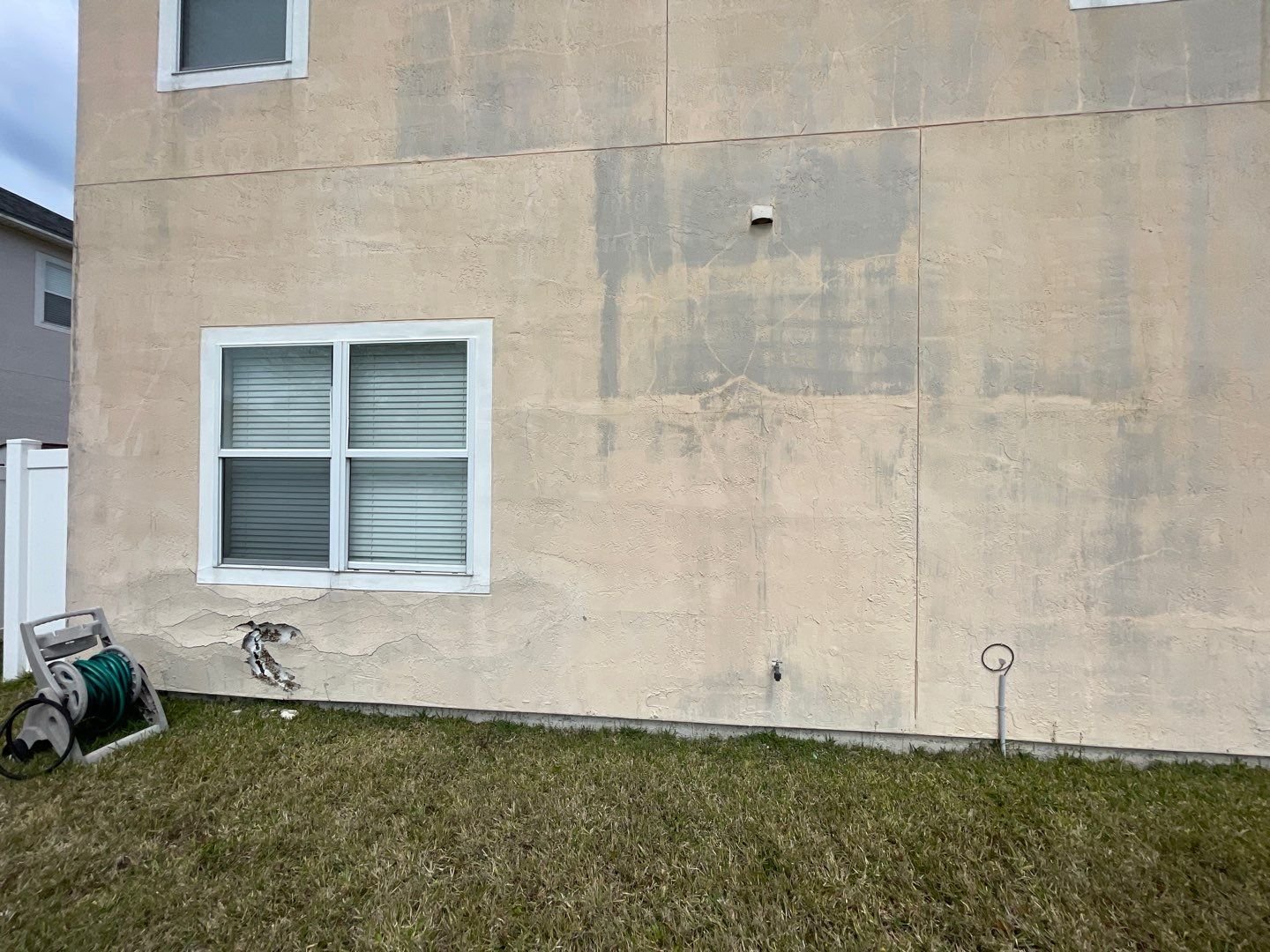 Real project
Recognized Across Northeast Florida for Quality, Care & Craftsmanship





Northeast Florida's Exterior Painting Resource
Exterior Painting Resources for Jacksonville & Northeast Florida
Expert guidance on exterior painting costs, preparation, products, colors, stucco, siding, Florida weather, HOA approval, and hiring a professional painter.
Exterior painting in Northeast Florida has to hold up against intense UV exposure, heat and humidity, frequent afternoon rain, mildew and biological growth, salt air near the coast, stucco cracking, wood deterioration, and HOA or ARB color requirements that many other regions never have to plan around. As Exterior Painters Jacksonville, FL homeowners have relied on since 2010, this hub organizes practical, homeowner-facing guides built from 15 years of painting homes throughout Northeast Florida — so you can find the specific answer you need, whether that's what a repaint should cost, why your paint is failing, or which color your HOA will actually approve.
Exterior Painting in Jacksonville: What Homeowners Should Know
Exterior paint in Jacksonville must withstand intense sunlight, high humidity, frequent rain, mildew growth, and — in coastal areas — salt exposure. These conditions place more stress on a coating than homeowners typically experience in other parts of the country, which is why a paint system that performs well elsewhere doesn't always perform well here. It's also why exterior painters Jacksonville, FL homeowners hire need real, local experience with these conditions, not just general painting skill.
Most homes need exterior repainting somewhere in the range of every 7 to 12 years, though the real answer depends heavily on surface type, sun exposure, and how the previous coating was applied. A long-lasting result depends more on proper washing, repairs, scraping, sanding, caulking, and priming than it does on paint alone — preparation is what determines whether a coating lasts a decade or fails in three years.
The correct process also varies by surface. Stucco, James Hardie® fiber-cement siding, wood trim, brick, aluminum, and previously painted surfaces each have different preparation requirements and call for different coating systems. And in many Jacksonville-area communities, exterior color changes require HOA or Architectural Review Board approval before work can begin, which affects both your color choices and your project timeline.
Where Should You Start?
- Planning an Exterior Repaint01 Understand the process, timing, preparation, and what a professional project actually includes.
- Comparing Exterior Painting Costs02 Research pricing, estimates, product tiers, and why quotes on the same home can vary by thousands.
- Diagnosing Paint or Surface Problems03 Peeling, fading, bubbling, chalking, mildew, cracks, wood rot, and other signs of coating failure.
- Choosing Colors and Products04 Exterior colors, sheens, HOA approval, paint brands, and Florida-specific product decisions.
The Homeowner Journey
Exterior Painting Roadmap
Most homeowners move through the same sequence when planning an exterior repaint. This roadmap follows that journey from first noticing a problem to standing in front of a finished home — use it to jump straight to the stage you're in.
- 01
Notice paint problems
Fading, chalking, peeling, or cracking that signals it's time to plan. See Paint Failure & Repairs.
- 02
Learn why it's happening
Florida's UV, humidity, and salt air accelerate coating breakdown in ways most climates don't. See Florida Climate & Paint Life.
- 03
Estimate project cost
Understand what drives pricing before you start collecting bids. See Costs & Estimates.
- 04
Choose colors
Coordinate body, trim, and accent colors, and confirm HOA requirements early. See Colors, Design & HOA Approval.
- 05
Compare paint systems
Match the product to your substrate and exposure rather than picking on price alone. See Paint, Primer & Sheen.
- 06
Understand surface preparation
Learn what separates a repaint that lasts a decade from one that fails in three years. See Planning Your Project.
- 07
View real projects
See how prep, repair, and product selection come together on actual Northeast Florida homes. See Featured Projects.
- 08
Request an estimate
Get a written, on-site estimate with prep, repairs, and products defined up front. Request an estimate.
By Substrate
Exterior Surfaces We Paint
Not every exterior surface behaves the same way, and treating them identically is one of the most common causes of early paint failure. Here's a quick overview of how preparation and coating requirements differ by substrate, with links to the detailed guide for each.
Stucco
See stucco guidesCracks as homes settle, needs masonry-compatible coatings and breathability.
James Hardie®
See siding guidesFiber-cement boards with joints that must stay sealed; cut edges need priming.
T1-11 Siding
See siding guidesPanelized wood siding prone to seam and edge deterioration if unprotected.
Cedar Siding
See siding guidesNatural wood movement and moisture sensitivity call for breathable coatings.
Wood Siding
See siding guidesThe most vulnerable common substrate; rot has to be repaired before coating.
Vinyl Siding
See siding guidesCan be painted with the right flexible, heat-reflective product and prep.
Aluminum Siding
See siding guidesProne to oxidation; needs a bonding primer formulated for metal.
Brick
See siding guidesPorous masonry that needs to breathe — the wrong sealer traps moisture.
Masonry
See stucco guidesBlock, concrete, and other cementitious surfaces share stucco's core requirements.
Trim
See product guidesUsually enamel-finished for durability; a frequent early failure point.
Fascia
See repair guidesWood or composite; exposed to constant moisture runoff from the roofline.
Soffits
See repair guidesVentilated and shaded, making them prone to mildew if left unaddressed.
Doors
See product guidesHigh-visibility, high-touch surfaces that benefit from a durable enamel.
Garage Doors
See color guidesLarge, sun-exposed panels that fade and chalk faster than shaded walls.
Find Your Guide
Not Sure Where to Start? Answer One Question.
These two quick paths point you straight at the right cluster based on your home's surface or the problem you're seeing.
What Type of Exterior Do You Have?
Exterior Painting Glossary
Exterior Painting Terms, Explained
Planning
Planning a Professional Exterior Painting Project
A professional exterior repaint follows a predictable sequence: recognizing the signs it's time, assessing the surfaces involved, getting a real written estimate, selecting products and colors, securing HOA approval where required, completing preparation and repairs, painting, and finishing with a walkthrough. Skipping steps in that sequence — or compressing them to hit a lower price — is where most early failures start.
Homeowners comparing bids often assume the spread in price comes from the paint itself. It almost never does. It comes from how much of this process is actually included: whether prep gets the time it needs, whether repairs are scoped honestly, and whether the crew plans for a final walkthrough or just leaves when the last coat goes on.
Key Takeaways
- A professional exterior project follows a full sequence — assessment, estimate, prep, repair, painting, walkthrough — not just the painting itself.
- Price differences between bids usually come from what's included in prep and repair, not from the paint.
- Maintenance after the project matters as much as the project itself for getting the full expected lifespan from a coating.
- What Is Included in a Professional Residential Painting Project?Best for: understanding exactly what should be in a written estimate before you sign.
- Why Surface Prep Matters in Residential PaintingBest for: the deep dive on why prep — not paint — determines how long a job lasts.
- How Often Should You Paint Your House?Best for: realistic repaint timelines by surface type.
- How Long Does a Professional Paint Job Last in Florida?Best for: what actually determines coating lifespan here versus other climates.
- The Ultimate Guide to Exterior House Painting Costs, Services & TipsBest for: a broad overview linking cost, process, and service scope together.
- Exterior Painting: Understanding Why Estimates VaryBest for: comparing two bids on the same home that look nothing alike.
See our professional exterior painting services in Jacksonville for the full process from estimate to final walkthrough.
Costs & Estimates
Exterior Painting Costs, Estimates, and Budget Planning
Exterior painting estimates vary based on home size and height, surface condition, the extent of repairs needed, substrate type, accessibility, the number of colors involved, the product system specified, how much masking and protection the property requires, HOA documentation, and the number of coats applied. Two estimates on the identical house can differ by thousands of dollars, and almost never because one painter is using dramatically cheaper paint.
The guides below approach cost from different angles — a general Jacksonville pricing overview, exterior-specific cost drivers, what a real estimate should spell out, why professional bids differ, and how repairs and product tier move the number. Read the one that matches the question you're actually asking.
Key Takeaways
- Home size, surface condition, repairs, accessibility, and product tier are the real cost drivers — not the painter's hourly rate.
- A dramatically low bid is a signal to ask what's missing, not a reason to celebrate.
- Compare the written scope between bids, not just the bottom-line total.
- Cost to Paint the Exterior of a HouseBest for: exterior-only cost factors isolated from whole-home pricing.
- Exterior House Painting Costs in JacksonvilleBest for: local Jacksonville-specific pricing context.
- Unlocking the Mysteries of House Painting EstimatesBest for: what a professional estimate should actually spell out.
- Exterior Painting: Understanding Why Estimates VaryBest for: why professional bids on the same home differ.
exterior painting cost guide for planning ranges by home size.
Florida Climate
Florida Weather, Exterior Paint Life, and Maintenance
Northeast Florida's climate is genuinely harder on exterior coatings than most of the country's. UV intensity here runs strong for most of the year, breaking down cheaper resins and pulling color out of pigments unevenly — south- and west-facing walls almost always fade first and fastest. Heat accelerates that breakdown further, and the daily temperature swing between a hot afternoon and a cooler evening drives thermal expansion and contraction in siding, trim, and stucco that works joints and caulk open over years.
Humidity and near-daily summer rain keep surfaces damp far longer than they look, which does two things: it extends how long a surface needs to dry before it can be safely coated, and it feeds mildew on shaded, poorly ventilated elevations. Homes near the Intracoastal and the coast add salt air on top of all of that, which corrodes hardware and accelerates coating breakdown further.
None of this means exterior paint is a losing battle in Florida. It means preparation and coating selection matter more here than they do in a milder climate, and a system chosen for this environment — applied over surfaces that were properly washed, repaired, and primed — performs dramatically better than one chosen without those factors in mind.
Key Takeaways
- Florida homes experience higher UV intensity, humidity, and (near the coast) salt exposure than most U.S. climates.
- Thermal expansion from daily heat swings works caulk and joints open over time — this is normal, not a defect.
- Proper washing, repairs, caulking, and priming determine paint longevity more than premium paint alone.
- South- and west-facing elevations fade first and need the most UV-resistant products.
- Best Exterior Paint for Florida Sun and HumidityBest for: matching a product to our specific UV and humidity conditions.
- Why Dark Exterior Paint Fades Faster in FloridaBest for: homeowners considering a deep or saturated body color.
- How Long Does Exterior House Paint Last?Best for: realistic lifespan expectations by product tier.
- How to Keep Your Paint From FadingBest for: maintenance habits that extend color life between repaints.
- Maintenance Tips for Your Exterior Paint JobBest for: a practical annual maintenance checklist.
- Benefits of an Annual Power WashBest for: the single cheapest thing you can do to extend coating life.
Diagnosing Problems
Why Exterior Paint Fails — and How Proper Repairs Prevent It
Peeling, blistering, bubbling, fading, and chalking rarely start with the paint itself. They start with what was underneath it: mildew that got coated over instead of killed, caulk that had already failed, a stucco crack that kept moving after it was painted, or bare wood that was already soft before the brush ever touched it. Understanding which failure you're looking at is the first step toward fixing it correctly instead of just repainting over the same problem a second time.
The guides below cover the most common failure patterns we're called to diagnose across Jacksonville, along with the repair work — carpentry, stucco repair, or both — that has to happen before a repaint will actually hold.
Key Takeaways
- Most exterior paint failures trace back to a preparation or moisture issue, not a defective product.
- Painting over an active problem (mildew, rot, an open crack) conceals it while it continues to get worse.
- Not every stucco crack is the same — cosmetic and structural cracks need different responses.
Three of the most common exterior coating failures we're called to diagnose in Northeast Florida.
- Why Exterior Paint Peels, Bubbles, or Fades in JacksonvilleBest for: distinguishing between the three most common visible failures.
- Why Is Your Exterior Paint Falling Off?Best for: adhesion failure specifically — paint coming off in sheets.
- Why Stucco Paint Peels in JacksonvilleBest for: stucco-specific peeling and moisture diagnosis.
- Rotten Wood Repair and Exterior PaintingBest for: wood rot at fascia, trim, and siding before repainting.
- Stucco Cracks in Jacksonville: Cosmetic vs. DangerousBest for: telling a hairline crack apart from a structural one.
- The Complete Stucco Repair ProcessBest for: the full repair sequence before any paint is applied.
See our wood rot and carpentry repair and stucco repair services.
Stucco
Stucco Painting and Repair Resources
Stucco is the most common exterior surface across Jacksonville and St. Johns County, and it behaves differently enough from other substrates to earn its own cluster. It cracks as homes settle, moves with moisture, chalks as coatings age, and can develop efflorescence where minerals migrate to the surface. It also needs to breathe — a coating that seals it too tightly can trap moisture behind the wall rather than protecting it.
Traditional cement stucco and synthetic stucco (EIFS/Dryvit) are not the same material and are not painted the same way, so it's worth knowing which one you have before assuming a guide written for one applies to the other. The acrylic-versus-elastomeric decision is also substrate- and condition-dependent rather than a fixed rule — the guides below explain when each makes sense.
Key Takeaways
- Traditional stucco and synthetic stucco (EIFS/Dryvit) require different preparation and coating approaches — know which one you have.
- Stucco needs to breathe; the wrong sealant can trap moisture rather than block it.
- Elastomeric coatings bridge hairline cracks well but aren't automatically the better choice over acrylic — it depends on the wall's condition.
- Texture matching on patches is what separates an invisible repair from one that stands out for years.
- Stucco Painting in Jacksonville: Cost, Prep, Cracks & Best Paint SystemsBest for: a single-page overview covering cost, prep, and product together.
- Best Exterior Paint for Stucco HomesBest for: narrowing down a specific product for stucco.
- Elastomeric Paint vs. Acrylic Paint for StuccoBest for: the core acrylic-vs-elastomeric decision.
- Elastomeric vs. Standard Paint on Florida StuccoBest for: a plain-English explanation of what actually differs between the two.
- The Pros and Cons of Elastomeric House PaintBest for: homes with extensive hairline cracking considering elastomeric.
- Why Stucco Paint Peels in JacksonvilleBest for: diagnosing an existing peeling stucco surface.
- Stucco Cracks: Cosmetic vs. DangerousBest for: assessing a specific crack before deciding on repair scope.
- Synthetic Stucco (EIFS/Dryvit) vs. Traditional StuccoBest for: confirming which type of stucco your home actually has.
- How Long Should Stucco Paint Last in Jacksonville?Best for: homeowners whose stucco paint failed earlier than expected.
Working through a specific stucco symptom — cracking, staining, efflorescence, bulging, or rust? Our dedicated Jacksonville Stucco Resource Center covers each condition in depth, with field photographs and what each one typically requires.
See our stucco repair services for crack repair and recoating before the finish goes on.
Siding, Wood & Brick
Exterior Siding, Wood, Brick, and Specialty Surface Guides
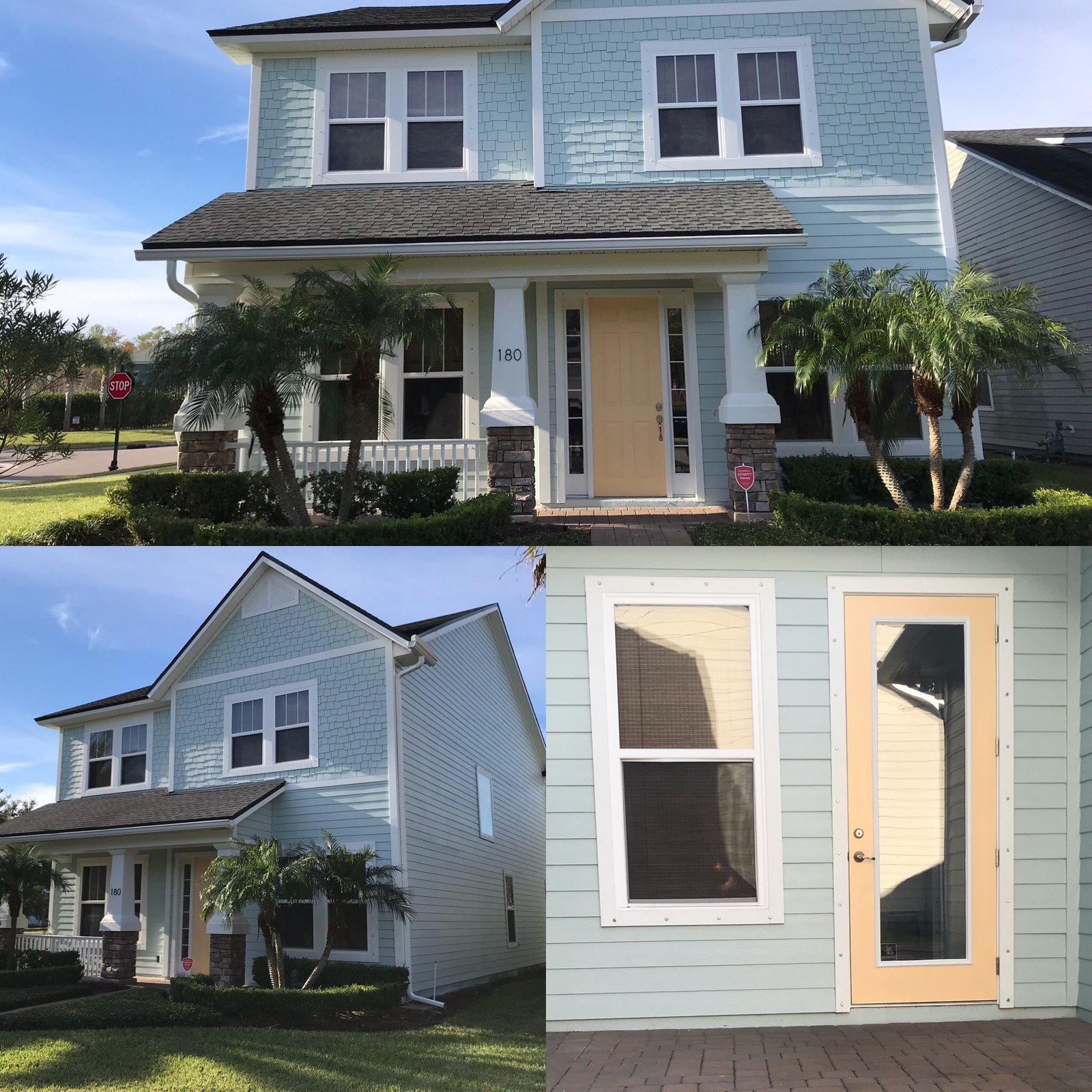
Outside of stucco, Jacksonville homes are clad in a genuine mix of materials — James Hardie® fiber cement, T1-11 and cedar wood siding, vinyl, aluminum, and brick — and each one fails differently and needs a different repair-and-coat approach. Fiber cement is a system of individual boards with joints that must stay sealed. Wood siding rots at end grain and behind failed caulk. Vinyl and aluminum need specific primers and flexible or heat-reflective products. Brick is porous masonry that needs to breathe, not get sealed shut.
Key Takeaways
- Fiber cement, wood, vinyl, aluminum, and brick each require a different preparation and product approach — there's no one-size-fits-all exterior system.
- Wood rot has to be repaired or replaced before painting; paint can protect sound wood but can't restore rotten wood.
- Brick needs a breathable product; sealing it too tightly traps moisture behind the wall.
James Hardie® and Fiber Cement
- Painting James Hardie Siding: Best Paint & ProcessBest for: the complete Hardie board painting reference.
- Exterior Hardie Board Siding Painting in Julington CreekBest for: Julington Creek homeowners specifically.
- Is Fiber Cement Siding Right for My Home?Best for: homeowners deciding whether to install Hardie board at all.
Wood, Cedar, Vinyl, and Aluminum
- Wood, Vinyl, Aluminum & Cedar Siding PaintingBest for: a comparison across all four non-stucco, non-Hardie materials.
- Rotten Wood Repair and Exterior PaintingBest for: wood rot repair before any coating goes on.
- Helpful Facts About Wood Rot in Your Jacksonville Beach HomeBest for: coastal homes with elevated wood rot risk.
- Can You Paint Vinyl Siding?Best for: homeowners wanting a new look without replacing vinyl siding.
- Should I Replace My Wood Trim With AZEK / PVC?Best for: deciding between repainting wood trim and replacing it with PVC.
See our wood rot repair service for fascia, trim, and siding restored before exterior painting.
Products
Choosing Exterior Paint, Primer, and Sheen
There's no single "best" exterior paint — the right choice depends on the substrate, the existing coating, sun and salt exposure, the color chosen, the sheen needed, moisture conditions, and how much maintenance the homeowner wants to do between repaints. A product that performs beautifully on a shaded, north-facing Hardie wall isn't necessarily the right call for a south-facing stucco elevation two doors down.
The guides below help narrow that decision by comparing brands, product lines, and sheens, and by explaining where primer is actually necessary versus where it's being added to pad a bid.
Key Takeaways
- Product selection should be driven by substrate and exposure, not brand loyalty alone.
- Primer is essential on bare, repaired, or dramatically color-changed surfaces — not on every surface by default.
- Sheen affects both appearance and durability; higher sheen resists dirt and wear but shows more surface imperfection.
- Best Exterior Paint for Florida Sun and HumidityBest for: climate-driven product selection.
- Sherwin-Williams vs. Benjamin Moore for Exterior ProjectsBest for: comparing the two major brands directly.
- The Difference Between Duration and EmeraldBest for: choosing between Sherwin-Williams's two flagship exterior lines.
- Should Exterior Paint Be Flat or Satin?Best for: a quick sheen decision for body color.
- Exterior Paint Sheen Guide for Jacksonville HomeownersBest for: the fuller sheen-by-surface breakdown.
- Do You Need to Be Priming Before Painting?Best for: deciding whether your specific surface actually needs primer.
- Why Sherwin-Williams Emerald Rain Refresh Should Be Your Next PurchaseBest for: homeowners considering the Rain Refresh line specifically.
Colors & HOA
Exterior Paint Colors, Design, and HOA Approval
Exterior color decisions rarely happen in a vacuum. The roof, brick or stone accents, and hardscape are fixed and have to be worked around rather than replaced. Florida sunlight reads color more strongly than most climates and pulls out undertones that were invisible on a small chip, so a "neutral" greige can go pink or green across a full wall. Dark colors absorb significantly more heat and fade faster on sun-facing elevations, which matters both for appearance and for how hard the coating has to work.
In many Jacksonville-area master-planned communities, none of that matters until the color is also approved. Most HOAs and ARBs require body, trim, and door colors to be submitted and approved before work begins, and that approval process needs to be built into your project timeline rather than discovered after you've already picked a color.
Key Takeaways
- Always test large-format samples on your actual walls in morning and afternoon light before committing to a color.
- Dark, saturated colors fade faster on south- and west-facing elevations in Florida sun.
- Most HOA and ARB communities require color approval before work begins — confirm early, not after you've chosen.
- How to Choose Exterior Paint Colors for Your Jacksonville HomeBest for: a step-by-step approach to picking body, trim, and accent colors.
- Most Popular Exterior House Colors in JacksonvilleBest for: seeing what's trending across the area right now.
- What Color House Goes With a Light Gray Roof?Best for: coordinating body color with a specific roof color.
- What Exterior Colors Make a House Look Expensive?Best for: homeowners prioritizing curb appeal and resale.
- Why Dark Exterior Paint Fades Faster in FloridaBest for: homeowners set on a dark or saturated color.
- Should I Hire a Professional to Help Choose Exterior Colors?Best for: homeowners undecided about a color consultation.
- How to Submit Paint Colors to Your HOA's ARBBest for: the step-by-step ARB submission process.
- What the Nocatee & Sawgrass ARBs Actually Look ForBest for: homeowners in those two specific communities.
Jacksonville HOA Directory and complimentary color consultation service.
Hiring
How to Choose a Qualified Exterior Painting Contractor
The gap between a painting company and a professional painting company shows up in specifics: whether they carry real insurance and can produce a certificate, whether the written scope names the exact prep and repair work included, how many coats are specified, what the warranty actually covers and excludes, how the crew communicates during a multi-day project, and whether they can show recent, comparable work.
This section is meant to help you evaluate any contractor, not just us — the questions below apply whether you're comparing three bids or deciding on the first one you received.
Key Takeaways
- Insurance, a written scope, and a defined warranty are non-negotiable, regardless of price.
- A vague estimate ("paint exterior, two coats") can describe two completely different projects.
- Ask to see recent, comparable project photos before signing — not just a portfolio of unrelated work.
- Can You Really “Never Paint Your House Again”?Best for: understanding “never paint again” and permanent-coating claims before committing to an exterior painting system.
- Lifetime Exterior Paint Warranties: What Florida Homeowners Should Actually ReadBest for: understanding what a lifetime paint warranty covers, what it may exclude, and the difference between product and labor warranties.
- Painters Near Me in Jacksonville: Find the Right One (Avoid the Wrong One)Best for: a broad "where do I even start" search guide.
- How to Find a Reputable House Painter Near YouBest for: vetting reviews and reputation specifically.
- The Risk of Hiring Uninsured PaintersBest for: understanding why insurance verification matters before signing.
- 10 Things to Check Before Hiring Professional PaintersBest for: a quick pre-hire checklist.
- How to Hire the Right Painter for Your Exterior ProjectBest for: exterior-specific hiring considerations.
- Exterior Painting: Understanding Why Estimates VaryBest for: reading a spread of bids on the same project.
Related Resource Collections
If You're Researching…
Each cluster above doubles as its own learning path. Here's the recommended reading order if you want to go deep on one topic in particular.
Planning work inside the home as well? Visit our Interior Painting Resource Center for Jacksonville-specific guides on interior paint, preparation, finishes, costs, and common wall problems. For stucco-specific diagnosis, the Jacksonville Stucco Resource Center goes deeper than this page does.
Local Experience
What We Commonly Find on Jacksonville Exteriors
Based on 15 years of painting homes throughout Northeast Florida, certain conditions show up again and again — often enough that they're less "problems" than predictable patterns of how homes in this climate age.
- Builder-grade coatings that fade or chalk noticeably earlier than homeowners expect, especially on homes now in their first decade.
- Hairline stucco cracking around window and door transitions, where the wall moves most.
- Failed caulking around trim, doors, and penetrations — usually the first thing to let go, and usually the entry point for the moisture problems that follow.
- Mildew concentrated on shaded, poorly ventilated elevations, particularly north-facing walls and areas tucked behind mature landscaping.
- Stronger, more uneven fading on south- and west-facing walls compared to shaded sides of the same home.
- Wood rot around fascia, soffits, columns, garage trim, and window trim — almost always traceable back to a caulk or flashing failure that let water in over time.
- Sprinkler staining and chronic moisture near the base of walls where irrigation heads strike the exterior directly.
- Accelerated coating breakdown on homes near the Intracoastal and the coast — Jacksonville Beach, Atlantic Beach, Neptune Beach, Ponte Vedra Beach, and Amelia Island in particular.
- Color restrictions and required ARB approval in Jacksonville's many master-planned HOA communities.
- Color mismatches that trace back to a home's fixed materials — roof, pavers, and stone — being overlooked during color selection.
Based on 15 years of painting homes throughout Northeast Florida.
Real Projects
Featured Exterior Painting Projects in Northeast Florida
These are real exterior projects completed by A New Leaf Painting Contractors, shown to illustrate how preparation, repair, and product selection come together on an actual Northeast Florida home — not generic stock photography.
Jacksonville, Florida
This home had areas of damaged and deteriorated T1-11 wood siding and exterior wood components that couldn't simply be coated over — portions required repair or replacement, alongside adjoining James Hardie® fiber-cement siding.
Prep & repairs: Damaged siding and wood components were removed and replaced, joints and trim transitions were caulked, and bare or newly installed siding was primed before painting.
Coating system: After repairs and priming, the exterior received a premium Sherwin-Williams siding system using Latitude® and Emerald® Rain Refresh™, selected according to the surface and project specifications.
Result: A cleaner, more uniform exterior with repaired siding, renewed trim, sealed transitions, and a consistent protective finish.
Mandarin, Jacksonville, Florida
Substantial fading and normal weather-related wear had left this stucco home with visible cracking and separated caulking around openings and trim transitions.
Prep & repairs: The exterior was washed, appropriate nonstructural stucco cracks were repaired and texture-matched, and failed caulking was removed and replaced at vulnerable seams and transitions.
Coating system: Following repairs, caulking, and surface preparation, the home received Sherwin-Williams Loxon® XP, a high-build masonry coating for concrete and stucco surfaces.
Result: A cleaner, brighter, more consistent exterior with reduced crack visibility, newly sealed transitions, and renewed weather protection.
Before and after James Hardie siding exterior painting project in RiverTown, St. Johns, Florida
RiverTown, St. Johns, Florida
This fiber-cement exterior showed extensive fading and weathering, with joints, nail heads, and trim transitions needing preparation before the home could be repainted.
Prep & repairs: The siding was cleaned, lap joints and trim transitions were inspected, failed caulking was addressed, and repaired or exposed surfaces were primed before finishing.
Coating system: After preparation and priming, the home received a premium Sherwin-Williams exterior finish using Latitude® or Emerald® Rain Refresh™, based on the project specifications.
Result: Renewed color, sharper architectural definition, and a consistent finish across the siding and trim.
King & Bear, World Golf Village, St. Augustine, Florida
This completed exterior painting project showcases the level of preparation, detail, and finish achieved on a large luxury stucco home in the King & Bear community. While only the completed images are available, the project demonstrates our approach to restoring faded stucco exteriors through extensive preparation, repairs, and premium coating systems.
Prep & repairs: The full exterior was washed, stucco cracks and surface defects were repaired, failed caulking was replaced, and repaired or porous areas were primed — using access equipment and controlled application methods across the home's tall elevations.
Coating system: A premium exterior masonry coating system suitable for painted stucco and Northeast Florida exposure was applied across the home's expansive walls and architectural details.
Result: A renewed, cohesive exterior with restored color depth, cleaner details, and consistent coverage across the home's large stucco elevations.
More Exterior Transformations
Before and after stucco exterior painting project in Coastal Oaks at Nocatee, Florida
Coastal Oaks at Nocatee, Florida 32081
A weathered stucco exterior with fading, hairline cracking, and aging sealant was thoroughly prepared, with appropriate cracks repaired and vulnerable transitions recaulked before painting.
Coating system: Following detailed preparation, the home received Sherwin-Williams Loxon® XP as the exterior coating.
Result: A refreshed, cohesive appearance with renewed color depth and a more uniform finish across the home's large stucco elevations.
Eagle Harbor, Fleming Island, Florida 32003
Substantial fading, stucco cracking, failed caulking, and surface blemishes required extensive preparation before this home's finish coat could be applied.
Coating system: The prepared stucco exterior received Sherwin-Williams Loxon® XP for uniform coverage across the repaired masonry surface.
Result: A refreshed exterior with more consistent color, cleaner architectural lines, and sealed transitions.
Fleming Island, Florida 32003
Considerable fading under Florida sun exposure, stucco cracks, aging caulk, and inconsistent surface areas required substantial preparation and repair before repainting.
Coating system: Once cracks, sealant joints, and damaged areas were repaired, the stucco received Sherwin-Williams Loxon® XP.
Result: A brighter, cleaner appearance with a more uniform color scheme and renewed protection across the stucco and trim.
Before and after exterior painting project in Ponte Vedra Beach, Florida Ponte Vedra Beach home before and after professional exterior painting
Ponte Vedra Beach, Florida
Coastal sun, humidity, rain, and salt-laden air had left this home with extensive fading, cracks, failed caulking, and worn trim requiring attention before painting.
Coating system: After repairs and priming, a premium Sherwin-Williams exterior coating system was applied — Loxon® XP on stucco areas, with Latitude® or Emerald® Rain Refresh™ on siding and trim, according to the substrate.
Result: Stronger color definition, cleaner trim lines, and a substantially refreshed appearance.
Frequently Asked Questions
Jacksonville Exterior Painting FAQs
Most Jacksonville homes need exterior repainting roughly every 7 to 12 years, though it varies by surface and exposure. Builder-grade paint often shows wear sooner, and south- and west-facing walls or homes near the coast typically need attention on the shorter end of that range. See Florida Climate & Paint Life for the full breakdown.
Questions Jacksonville Homeowners Ask Us Every Week
Quick answers to the questions that come up constantly on estimates and phone calls. For anything that needs more depth, the linked cluster above covers it in full.
Surfaces & Substrates
Paint Failure & Diagnosis
Preparation & Application
Products & Systems
Color, HOA & Planning
Continue Learning
Exterior Painting University
A suggested reading order, from the fundamentals every homeowner should know to the substrate-specific detail that matters most for larger or specialty projects.
Ready When You Are
Ready to Plan Your Exterior Painting Project?
Use this hub to understand your options, then request an on-site estimate when you're ready. Every estimate includes a written project scope, surface and repair evaluation, paint-system recommendations matched to your substrate and exposure, HOA color support where applicable, and clear communication from the first call to the final walkthrough.
- Fast scheduling available
- Office Mon to Sun, 7am to 7pm
- Fully licensed and insured, with $3M+ in coverage

Request a callback
Tell us about the job and we call back to book a walkthrough. No obligation.